Start at University Avenue and walk south on 30th Street. For the first six or seven blocks, the street is in constant motion. Storefronts wrapped in construction paper. Sidewalk signs for restaurants that didn't exist in January. A crowd outside a door before 6 p.m. on a Tuesday.
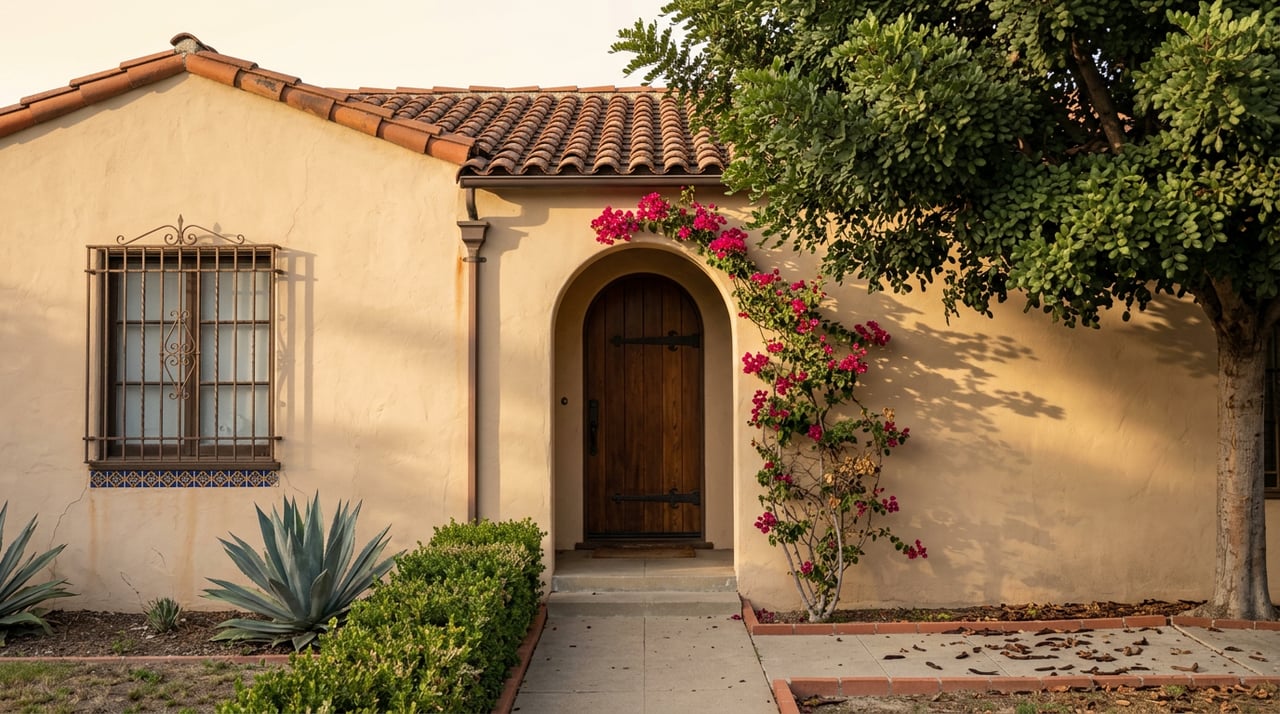
Then you cross Juniper Street, and the noise drops off like someone turned a dial. The buildings get quieter. The businesses get older. The crowd thins to regulars who've been coming to the same four or five spots for a decade. Same sidewalk. Same zip code. Same 1920s bungalow stock lining the residential blocks behind the storefronts on both sides. Completely different street.
This isn't decline on one side and prosperity on the other. It's two neighborhoods running two different experiments on purpose, and if you live anywhere near 30th Street, which stretch you're standing on should decide what you do tonight.
The corner that started the north half's year
The clearest marker of what changed is a single intersection: 30th and University. For more than a decade, the northwest corner sat empty. Chef Brad Wise, who runs Trust Restaurant Group, called it a neighborhood eyesore that ran through tenant after tenant without anything sticking for eleven years. Trust started leasing the space more than two years before it opened, and by the time À L'Ouest debuted on February 11, the group had put roughly $5 million into the build.
"I don't know if there's a more ideal neighborhood to be in."
That's Wise talking about North Park, and the bet paid off fast. À L'Ouest became the hardest reservation in the neighborhood within weeks, a 5,400-square-foot French brasserie with a wraparound patio that activates both University and 30th at once, wood-fired steak au poivre and duck à l'orange, and a room designed by Studio Rallou that reads more Paris than Pacific Beach.
A few blocks down 30th, a second landmark reopened the same month. The two-story, New Orleans-style building at 3823 30th Street had sat vacant since Urban Solace, the restaurant that helped define North Park's food identity in the first place, closed its doors. In February, the Los Angeles wine bar Bacari took over the space, preserving the original architecture while adding Art Deco touches and a menu built around shareable Mediterranean plates. The watermelon-based Bacarita has already become the drink people order without looking at the list.
Two marquee buildings, empty for years, both filled in the same month by operators who could have opened anywhere in Southern California and chose this corridor instead.
What comes next on that half of the street
The north stretch isn't done. Bar Nice, a French Old World bistro from industry veteran Anthony Viveros, is set to open in the historic Lynhurst Building at 3396 30th Street, in a space that used to hold Aburi Sushi. It's been delayed more than once, but it's still the project locals ask about.
Further along, at 4594 30th Street, a New York City-style deli called B's Bodega is targeting a September opening. The space briefly had a different future planned. A French oyster bar called Ophelia's was announced for the same address and never materialized. B's Bodega, from Friendly Group culinary director Rob Brouillard, is aiming at something the corridor has actually been missing: a no-modification breakfast sandwich and deli counter built for 10 a.m., not 7 p.m.
That detail matters more than it sounds. Pair it with Labora Cafe, which opened this spring at 2899 University Avenue next to the Observatory North Park serving ceremonial-grade matcha sourced from Kyoto and Kagoshima alongside slow-drip Vietnamese coffee, and a pattern shows up. North Park isn't just adding dinner reservations. It's adding reasons to be on the street at 10 in the morning and 11 at night, not only at seven o'clock.
Six blocks south, a different theory entirely
South Park is working from the opposite playbook, and it isn't an accident or a lack of investment. The South Park Business Group, with backing from the city's Small Business Enhancement Program, operates on the premise that the neighborhood's value comes precisely from storefronts that don't turn over.
The clearest proof of that theory is the Walkabout. It started around fifteen years ago at the Whistle Stop, when a handful of local business owners realized that coordinating their open hours would let them share foot traffic instead of competing for it. It now draws two to three thousand people every quarter, and the lineup of who's pouring what reads like a neighborhood that already knows exactly who it is: Bad Madge running a custom cap bar with lemonade and mimosas, Bock pouring tri-tip sandwich specials alongside a rotating brewery spotlight.
South Park also brought back an older tradition rather than launching a new one. The Taste of South Park returned in September 2025 after a five-year hiatus and sold out. Where North Park measures its year in openings, South Park measures its year in what came back.
The comparison, laid flat
North Park half (University to Juniper) | South Park half (Juniper south) | |
|---|---|---|
Defining rhythm | Weekly opening calendar | Quarterly Walkabout, annual Taste of South Park |
Signature 2026 arrivals | À L'Ouest, Bacari, Labora Cafe, Bar Nice pending | None planned; tenants largely unchanged |
What's being built | All-day traffic, 7 a.m. to 11 p.m. | Loyalty to a fixed roster of businesses |
Governing group | Individual operators (Trust Restaurant Group and others) leasing marquee corners | South Park Business Group, city-supported |
Neither stretch is right or wrong. They're answering different questions. North Park is absorbing capital and operator risk on a corridor already zoned for late-night entertainment, sitting next to a 1,100-seat music venue in a converted 1929 theater that's booking harder than it has in years. South Park is protecting a walkable, low-turnover retail street that a lot of Southern California would trade its whole downtown for.
What this actually changes about your week
If you live within walking distance of 30th Street, the split changes concrete decisions, not just which side you'd rather brag about to visitors.
- Dinner before a show at the Observatory: the north stretch is now built for exactly this. À L'Ouest or Bacari, then a two-minute walk to the venue.
- A quiet Tuesday when you don't want a scene: south past Juniper, where the regulars are regulars for a reason and nobody's trying to be the hottest reservation of the month.
- Morning coffee that isn't a chain: Labora Cafe for matcha, or wait for B's Bodega this September if you want a proper deli sandwich without upcharges for substitutions.
- The second Saturday of any month: Ray at Night fills the Ray Street galleries with a free art walk that spills into the surrounding blocks.
- Any given Thursday: the North Park Thursday Market runs year-round if you'd rather shop than sit down.
- Once a quarter: check when the next Walkabout lands in South Park. The first hundred people to check in get a free tote, and the lineup of who's pouring what changes every time.
None of this requires choosing a side permanently. It requires knowing, on any given night, which few blocks of 30th Street are built for what you actually want to do.
The thing worth watching
The interesting question for 2026 isn't which stretch of 30th Street wins. It's whether the boundary at Juniper holds, or whether North Park's momentum eventually pulls South Park's low-turnover model along with it. Right now the two halves are running parallel experiments a few blocks apart, and that's precisely what makes the street worth paying attention to if you already call this part of San Diego home.
If you're curious how these shifts on the ground read against what's actually happening with property values and turnover in San Diego, Christopher Harris keeps an eye on both sides of that Juniper Street line and is always glad to talk through what it means for the block you live on.